Sounds and script3 min read
Mandarin tones belong to words. A beginner needs to hear and produce meaningful differences, rather than give every syllable an exaggerated melody. Start with a small set of syllables, connect sound to meaning, and then carry the contrast into short phrases.
Read the guide ↗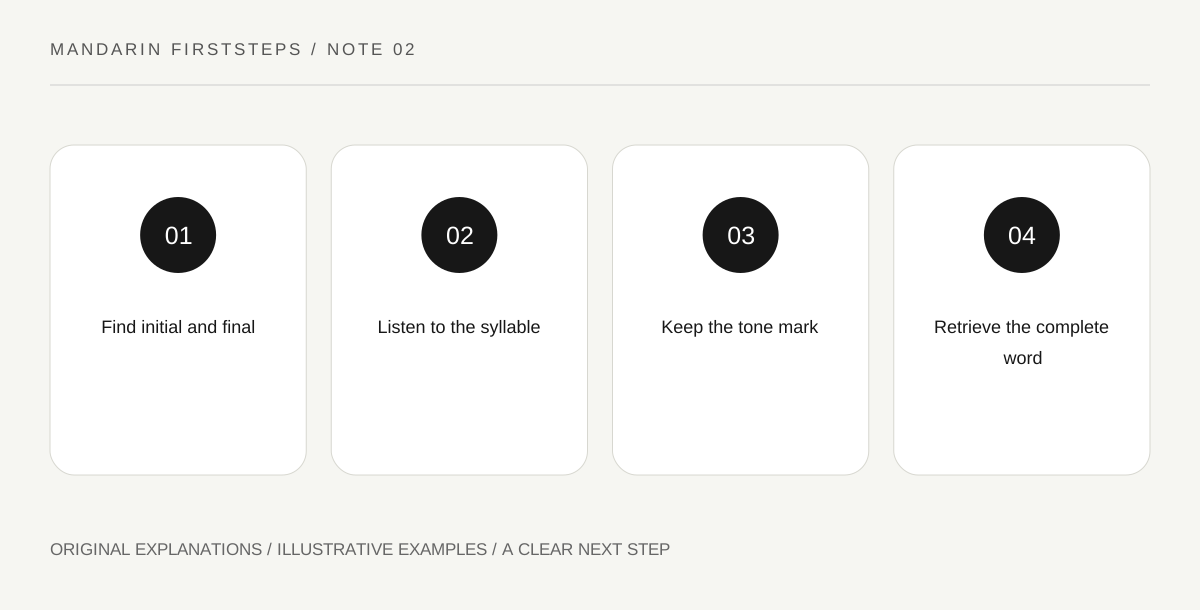
Sounds and script3 min read
Pinyin uses familiar letters to represent Mandarin sounds. Familiar appearance can mislead English readers, especially with q, x, zh and ü. Learn the system through syllables and recordings so that the written form points you toward Mandarin rather than an English approximation.
Read the guide ↗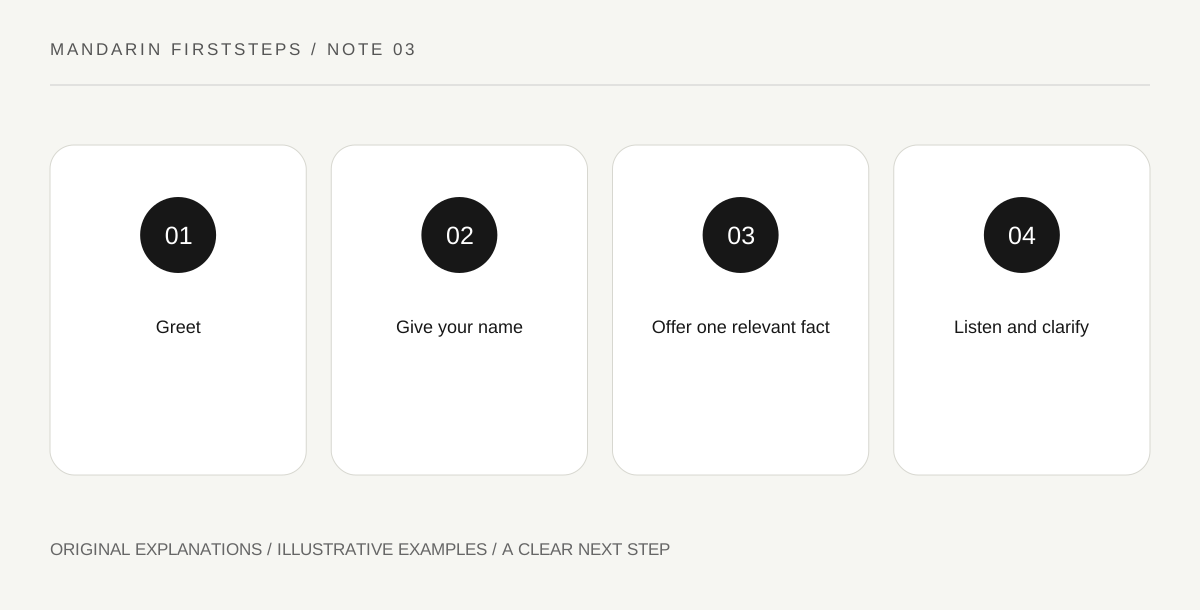
Everyday exchanges3 min read
A useful introduction does not require a biography. Learn to greet someone, give the name you actually use, and add one relevant fact. Then practise hearing the other person’s introduction so the exchange becomes a conversation instead of a memorized speech.
Read the guide ↗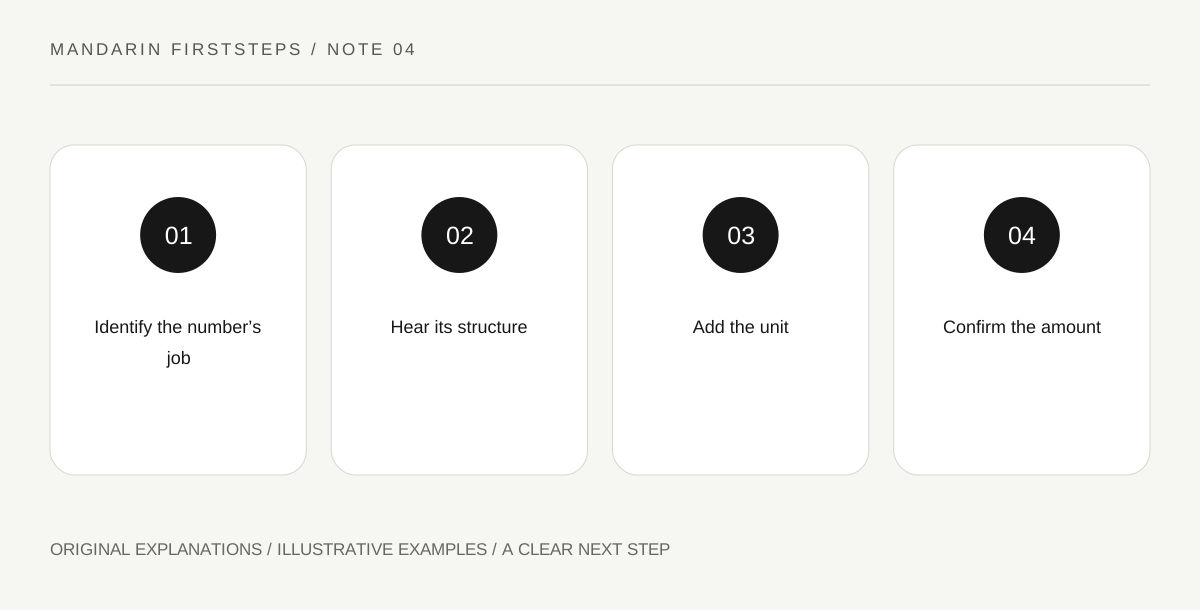
Sentence building3 min read
Counting to ten is the beginning of number use. Real exchanges require you to distinguish a quantity from a sequence of digits, hear similar-sounding numbers, and confirm the whole amount. Practise those jobs separately before combining them in shopping or appointment conversations.
Read the guide ↗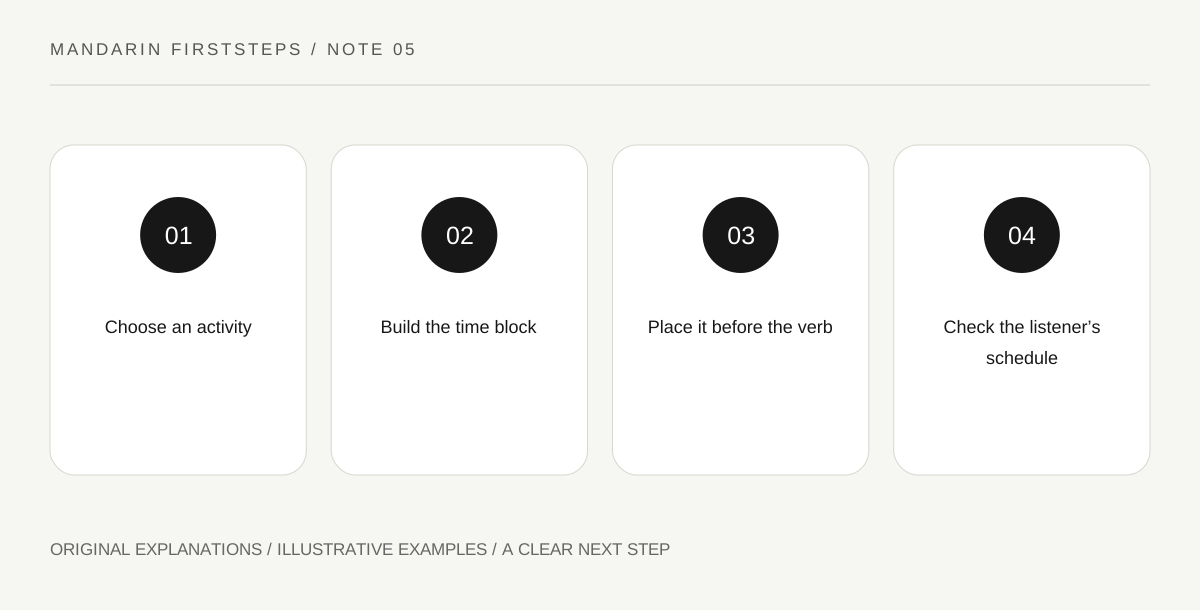
Sentence building3 min read
English often places time at the end of a sentence. A dependable beginner Mandarin pattern places it before the verb. With a few activity phrases and clear time blocks, you can describe a simple day and understand when someone else intends to do something.
Read the guide ↗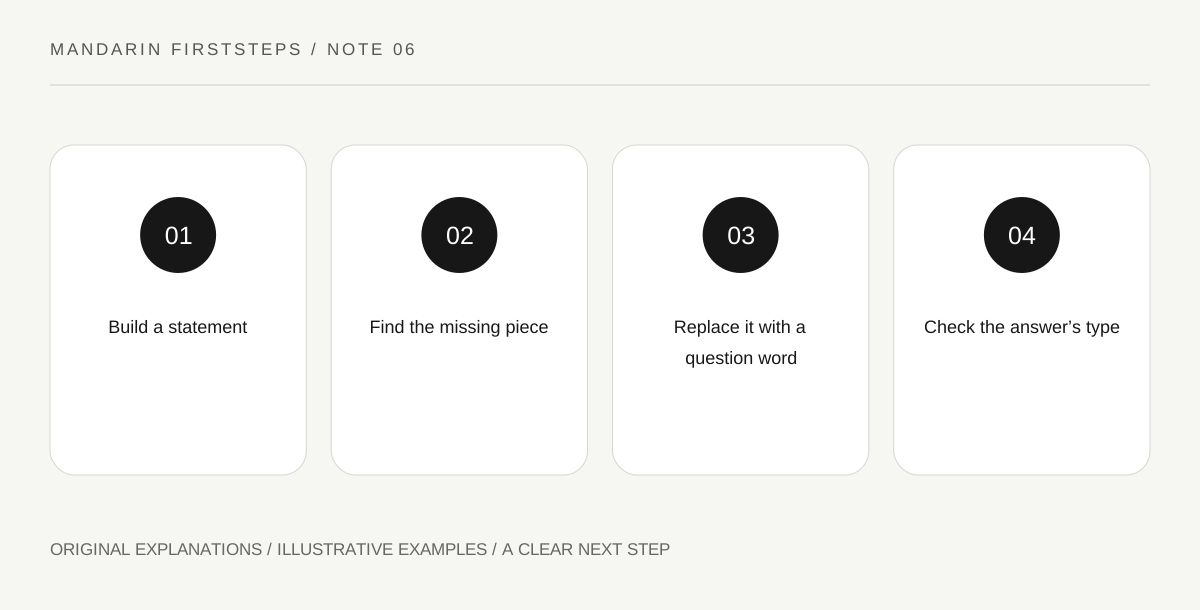
Sentence building3 min read
A Mandarin information question often keeps the question word where the answer would belong. This makes a useful beginner strategy: build a statement, identify the missing information, and replace that piece. Learn the contrast between asking an action’s object and asking its location.
Read the guide ↗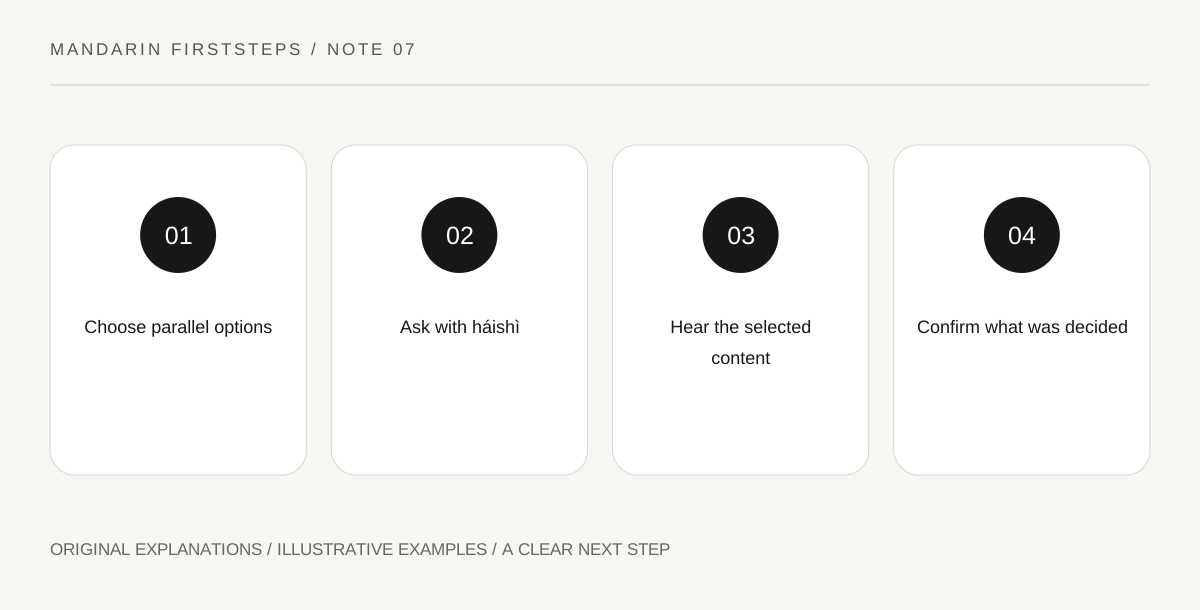
Sentence building3 min read
A choice question can be easier to understand than an open question, especially when the alternatives are visible. Mandarin uses háishì in common questions such as tea or coffee. Practise balanced alternatives, useful answers, and the difference between offering a choice and describing possibilities.
Read the guide ↗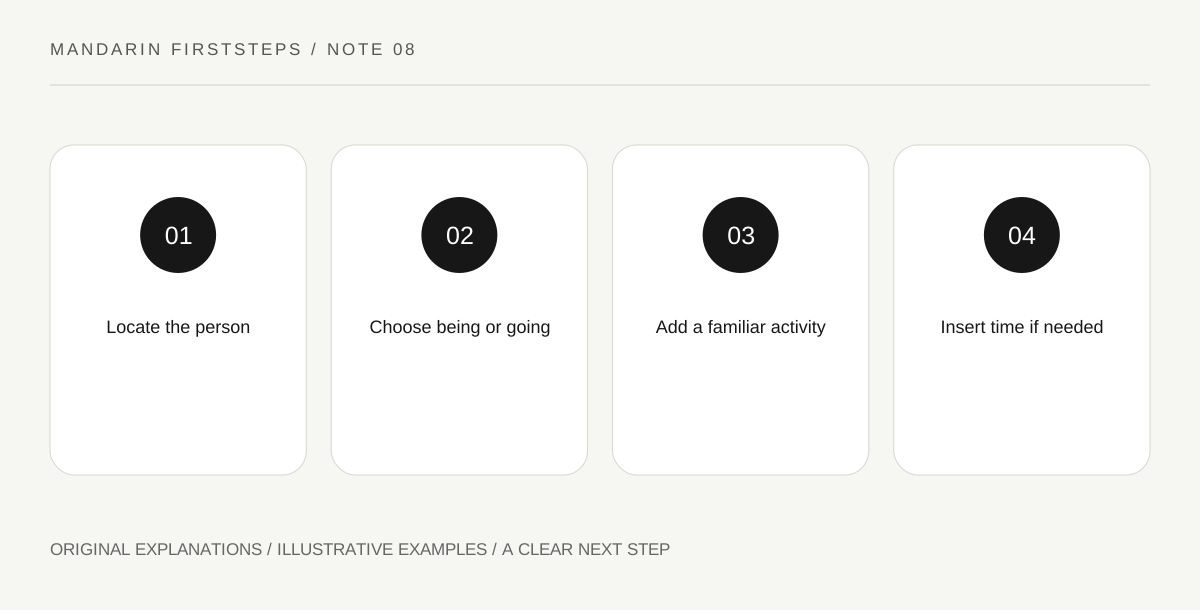
Sentence building3 min read
A beginner can use zài to locate a person, then extend that idea to where an activity takes place. The two sentence patterns are closely related but have different jobs. Learn them with a room sketch and familiar actions rather than a long list of disconnected place words.
Read the guide ↗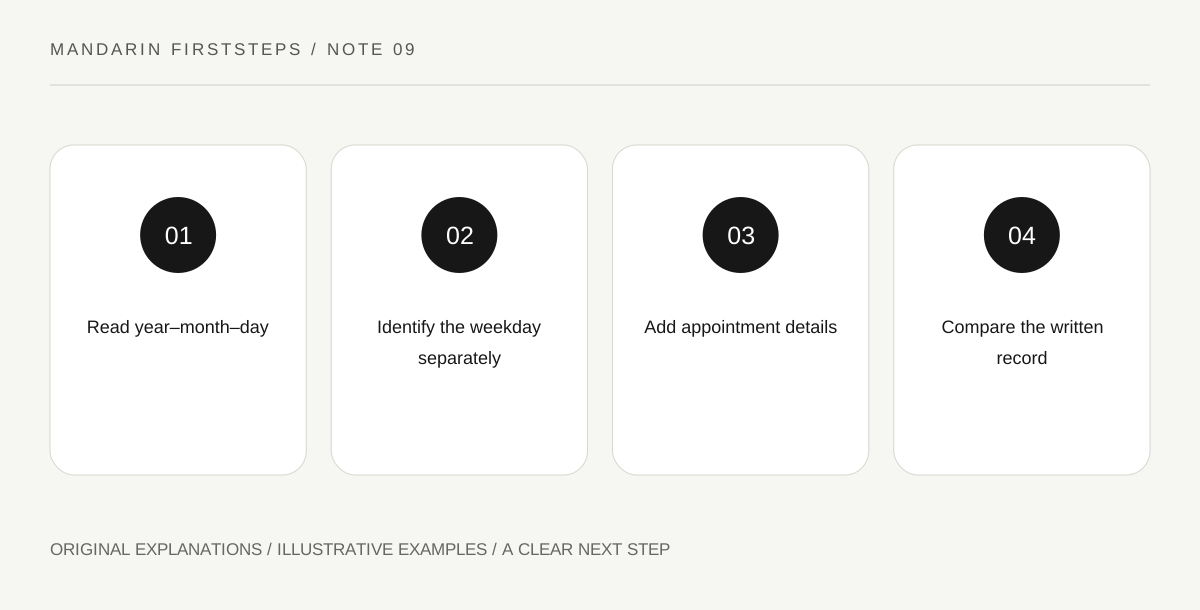
Everyday exchanges3 min read
Dates become easier when you keep their parts in a consistent order and avoid translating an English date one word at a time. Learn year, month and day as a sequence, then connect a written date to the weekday and the appointment you intend to make.
Read the guide ↗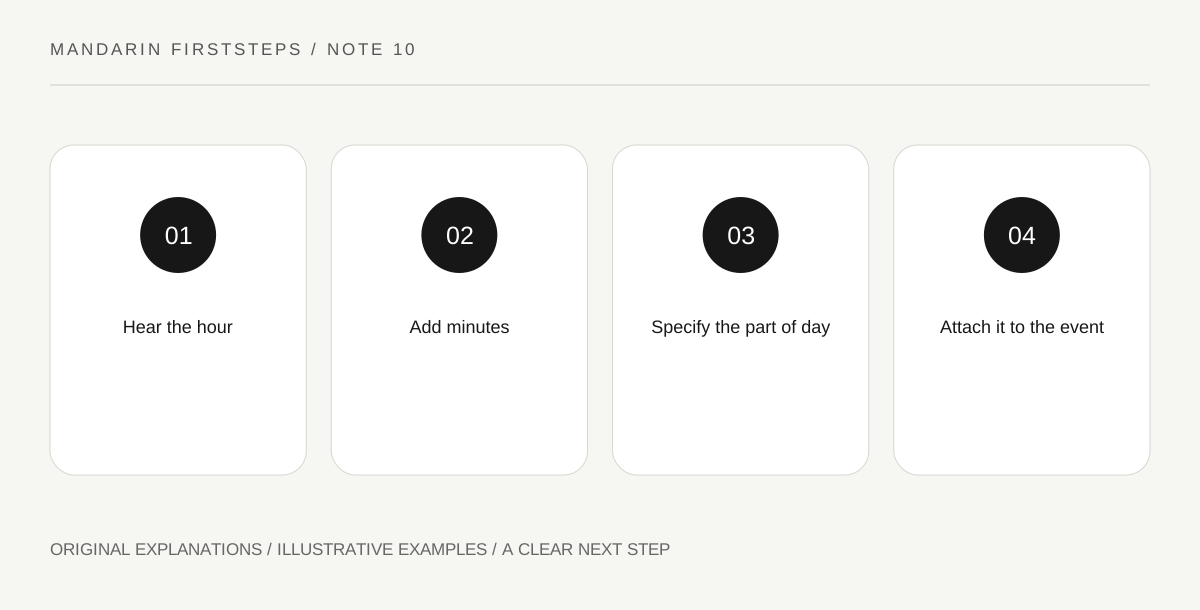
Everyday exchanges3 min read
A clock time needs more than a number. Beginner Mandarin gives you a useful system for hours and minutes, but a practical meeting also needs the part of day and the correct reference point. Learn a few clear forms before adding conversational shortcuts.
Read the guide ↗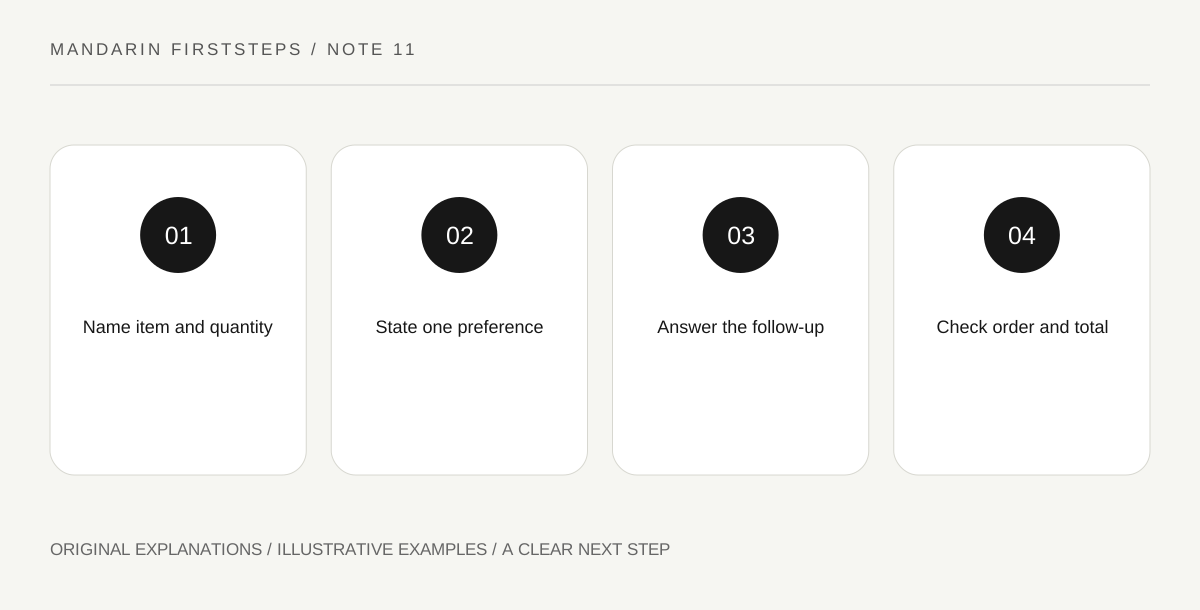
Everyday exchanges3 min read
A drink order combines vocabulary, numbers and a polite request in a small space. Make the base order understandable before adding customizations. Then learn to recognize a follow-up question, because the person taking your order may need information that your memorized opening did not include.
Read the guide ↗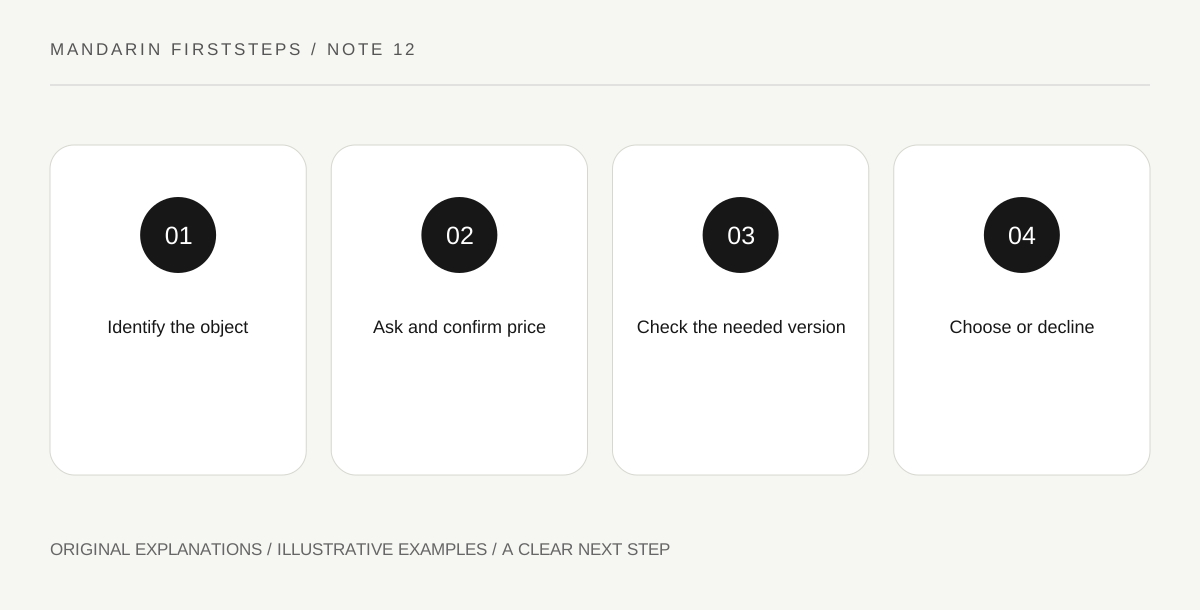
Everyday exchanges3 min read
A short shopping conversation has several separate questions: which object, how much, and whether the available version fits your needs. Learn to point and name clearly, ask a focused question, and leave room to decline. Buying something is not a required outcome of language practice.
Read the guide ↗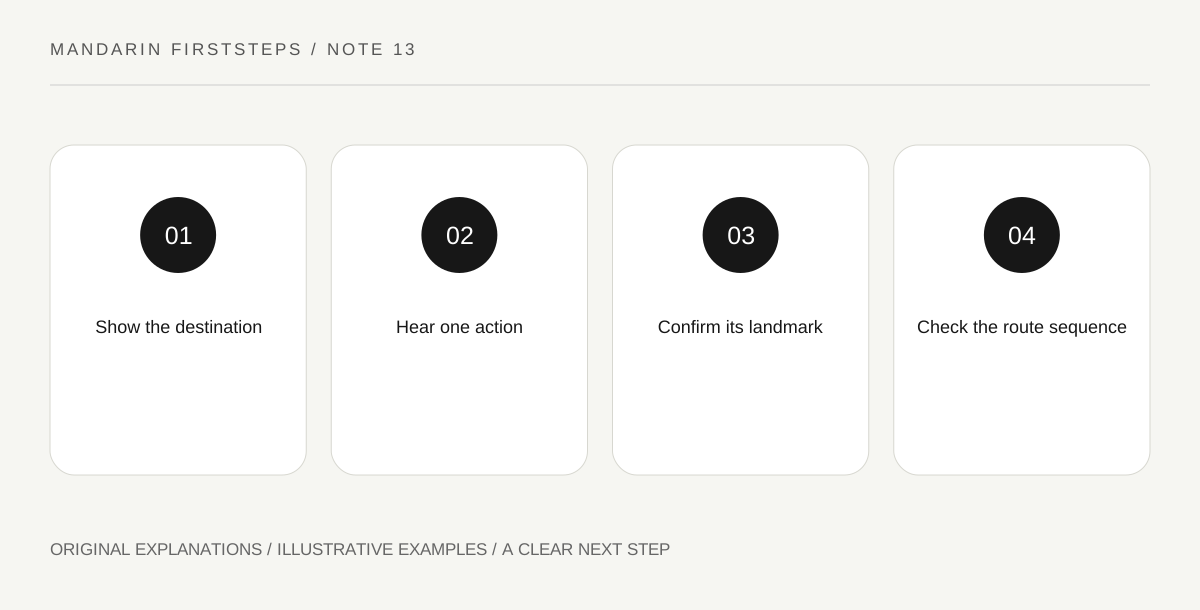
Everyday exchanges3 min read
Directions are demanding because the answer can contain several unfamiliar places and actions in quick succession. Begin with one destination and a few core movement words. Your first goal is to understand the next useful step, then confirm enough of the route to proceed confidently.
Read the guide ↗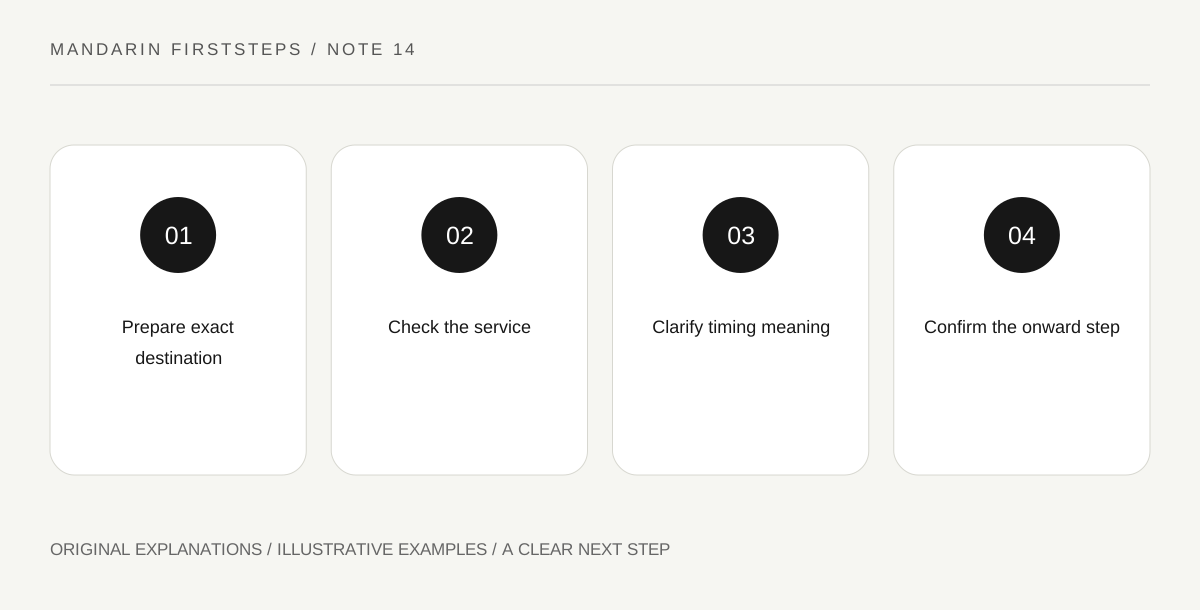
Everyday exchanges3 min read
In transport conversations, an almost-correct place name can send you somewhere unintended. Put the destination first, support it with written information, and separate route questions from payment or timing questions. Beginner Mandarin is useful for checking details when combined with signs and official travel information.
Read the guide ↗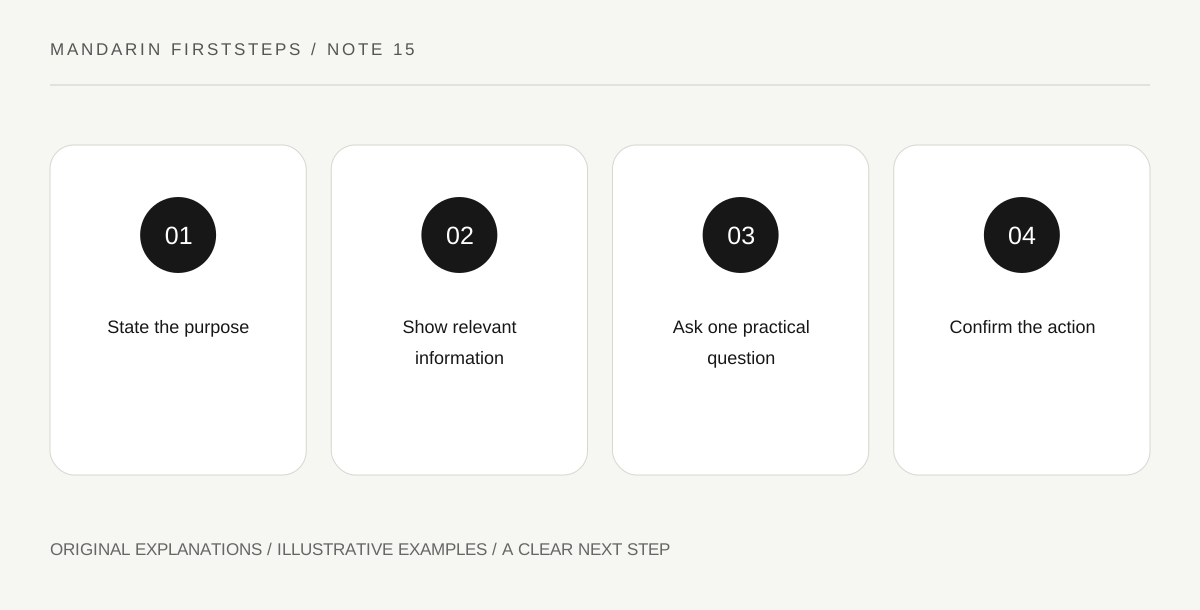
Everyday exchanges3 min read
A hotel conversation becomes manageable when you divide it into one purpose at a time. State that you have a booking, show the relevant information, and ask one practical question. Keep identity documents and payment details out of casual language practice and use fictional records for rehearsal.
Read the guide ↗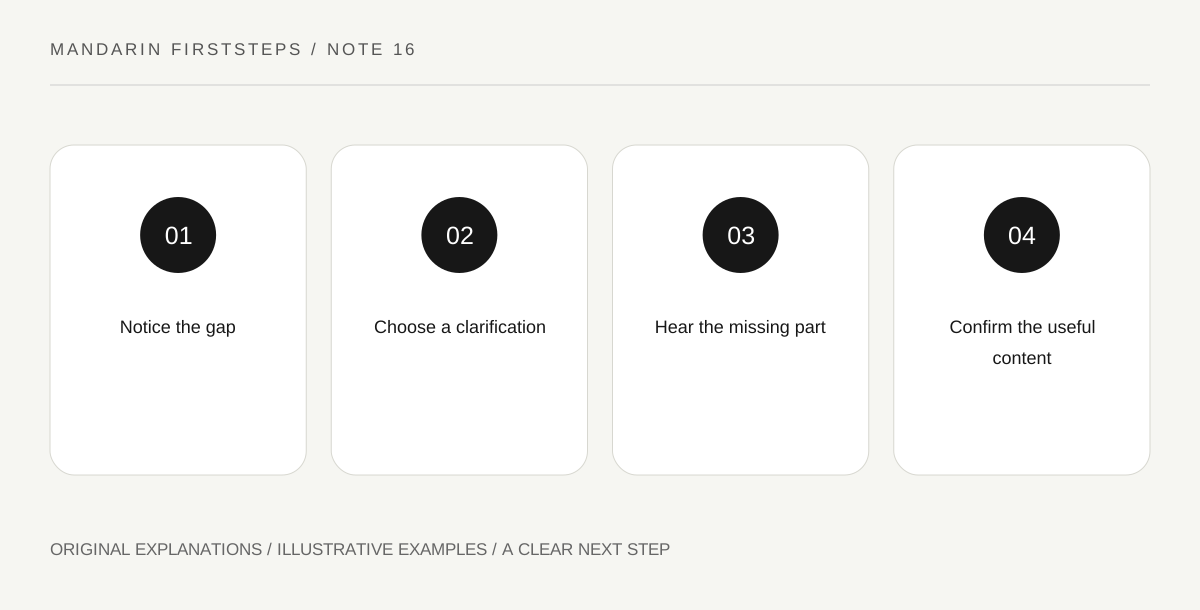
Everyday exchanges3 min read
Not understanding is a normal part of beginner conversation. A small set of clarification phrases lets you stay in the exchange without pretending. Learn to ask for repetition, request a slower version, identify the missing part and confirm what you finally understood.
Read the guide ↗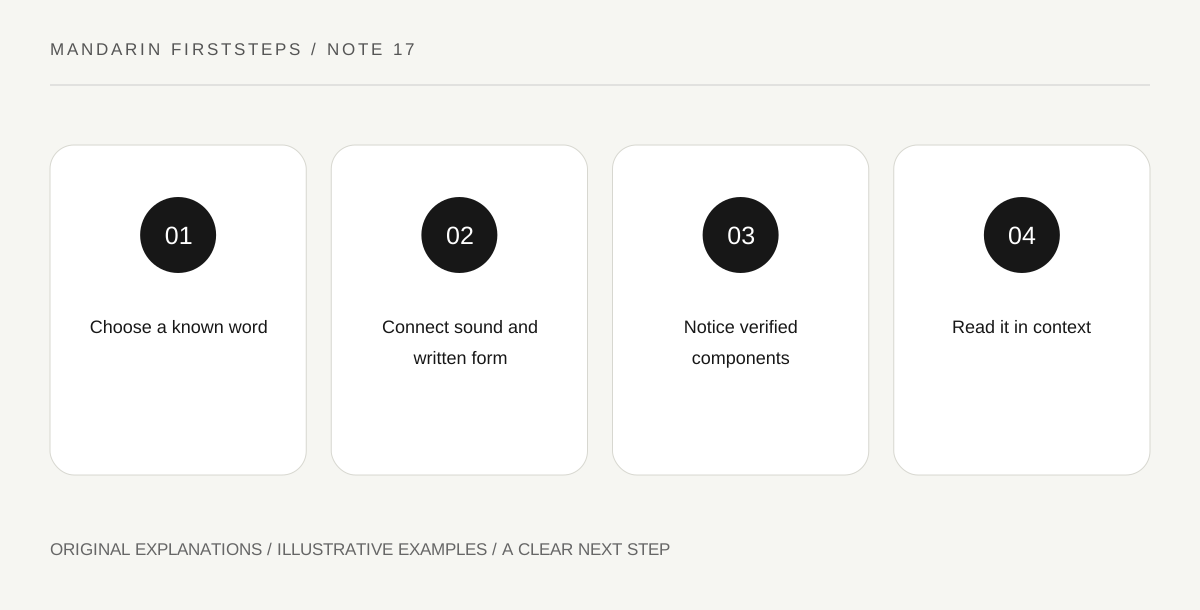
Sounds and script3 min read
A character is a written unit, and a useful Mandarin word may contain one character or several. Start with words you already know by sound, connect their written forms to meaning, and notice recurring components without assuming every component supplies an exact definition or pronunciation.
Read the guide ↗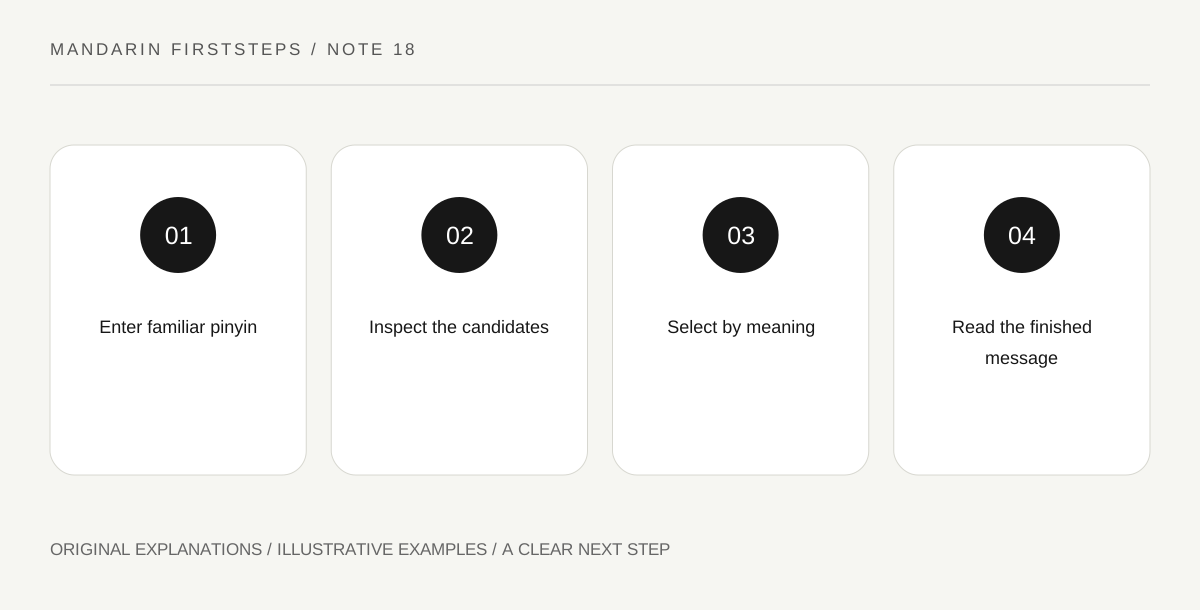
Sounds and script3 min read
A pinyin keyboard turns a sound sequence into candidate characters. It does not know your intended meaning perfectly. Learn to enter a complete familiar word, inspect the candidate and read the resulting sentence so that typing becomes language practice rather than a race to accept the first suggestion.
Read the guide ↗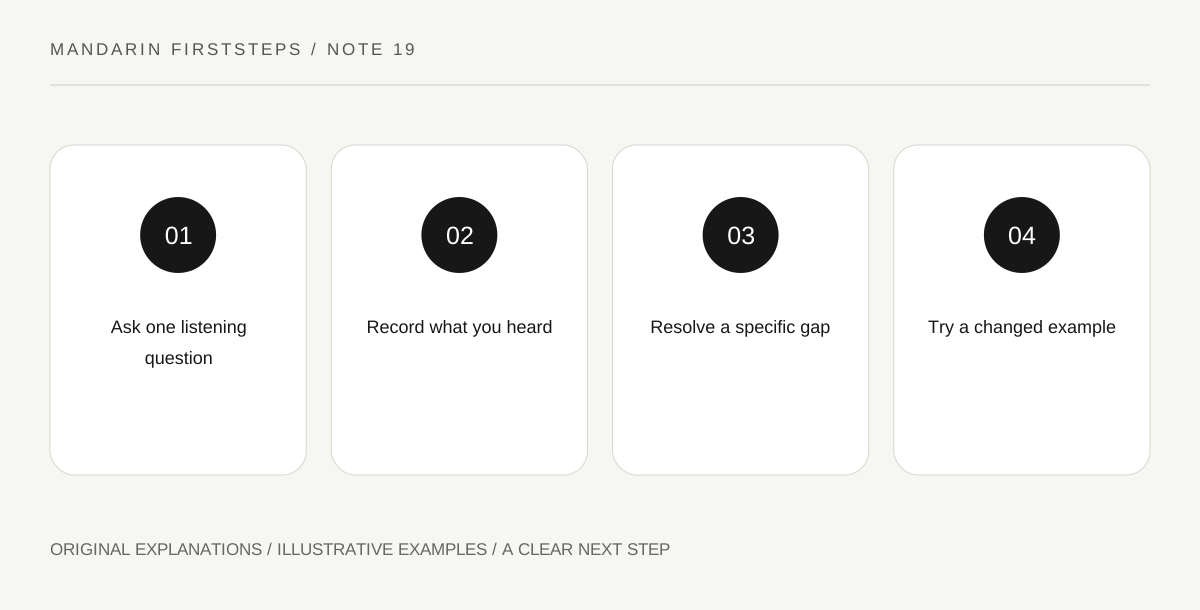
Practice habits3 min read
A beginner listening task becomes more useful when it has a clear purpose. Instead of trying to write every syllable, decide whether you need a time, place, item or action. Listen for that answer first, then use a transcript to investigate the part that prevented understanding.
Read the guide ↗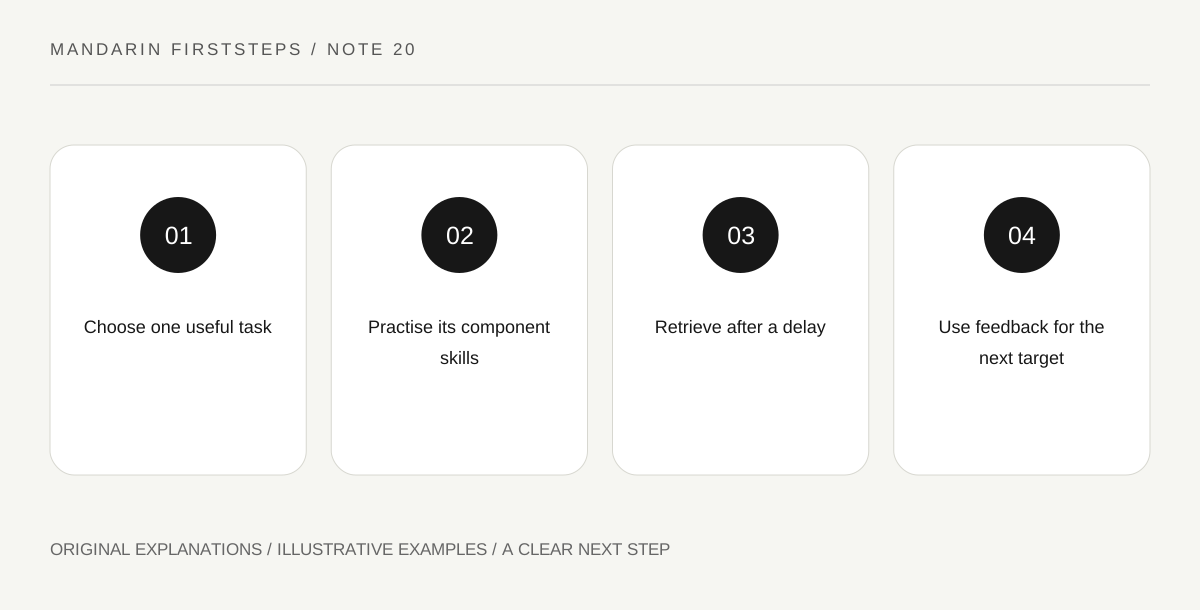
Practice habits3 min read
A realistic Mandarin routine connects short study sessions to things you want to understand or say. Combine sound work, useful sentence patterns, listening and a few characters. Measure progress by completed communication tasks and retained knowledge rather than a promise to become fluent within a fixed number of days.
Read the guide ↗