Order a drink with a quantity and one clear preference
A drink order combines vocabulary, numbers and a polite request in a small space. Make the base order understandable before adding customizations. Then learn to recognize a follow-up question, because the person taking your order may need information that your memorized opening did not include.
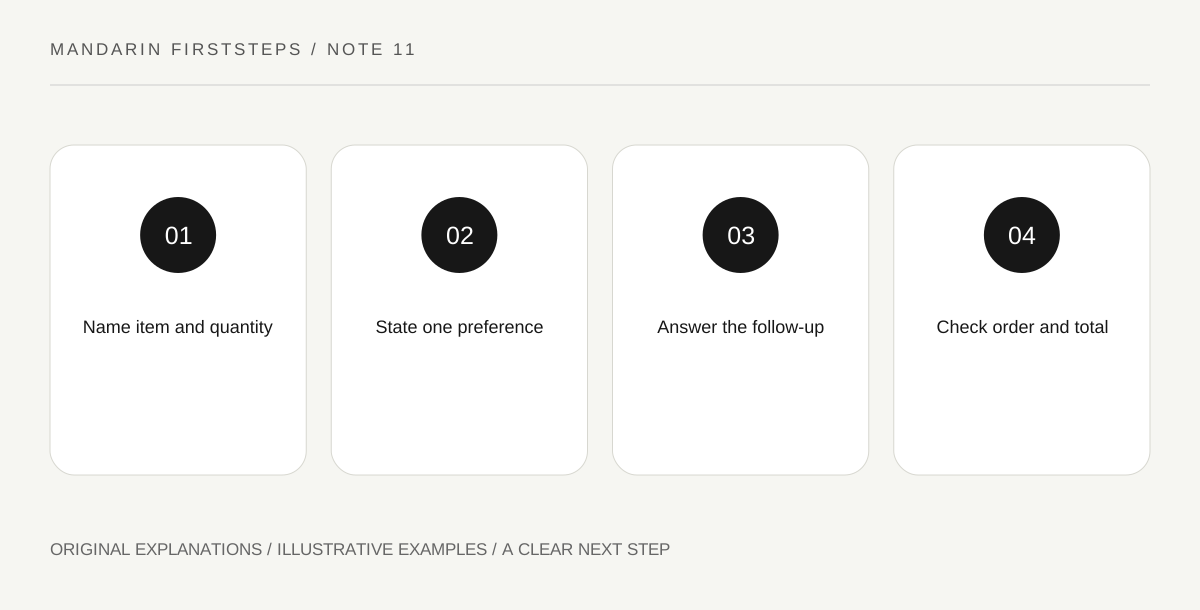
Original explanatory diagram. Read the full method and limitations below.
Name the drink and its container
Wǒ xiǎng yào yì bēi chá, 我想要一杯茶, means I would like a cup of tea. The phrase yì bēi provides a quantity and cup measure. Liǎng bēi chá asks for two cups. Learn the drink with its usual serving word so you are not left searching for a measure word while someone waits.
Start with water, tea and coffee, then use the specific menu names you actually expect to need. A word such as tea covers many drinks with different ingredients and preparation styles. Pointing to a written menu entry can make the exact choice clear while you practise the spoken request.
Add one preference at a time
Bú jiā táng, 不加糖, means do not add sugar; rè de, 热的, means hot in an appropriate drink context. These phrases describe a request, but cannot guarantee how a shop prepares its products. Some ingredients may already be mixed. A question and confirmation are necessary if the detail matters.
For a first role-play, choose only one change: hot rather than cold, or no added sugar. Once that is understood, add a second. Long strings of unfamiliar modifiers increase the chance that neither learner knows which part failed. A clear base item plus one checked preference creates a more useful practice challenge.
Listen for the next question
You may be asked about size, temperature, takeaway or another option. Recognizing the expected choices is often harder than saying your initial request. Practise hearing a pair and selecting one, using visible cards at first. Ask Qǐng zài shuō yí biàn when needed rather than giving an automatic yes.
If you do not understand an unfamiliar size name, point to the displayed size or ask the person to show it. Menu terminology varies across businesses. A phrase learned in class is a tool for clarification, not a promise that every café will use the same vocabulary or ordering sequence.
Confirm the item and the total separately
Check that the intended drink and quantity are on the order before dealing with the price. A correct price does not establish that the item is correct. Repeat a short summary or compare the receipt. When the conversation gets complicated, written words, menu pictures and digits are ordinary communication tools.
In practice, let the server intentionally change one detail: quantity, temperature or item. The customer must identify and correct it politely. Then check the illustrative total as a separate step. This exercise teaches attention to the actual order rather than treating the end of a memorized sentence as the end of the task.
Illustrative café exchange
A customer points to a tea on the practice menu and says Wǒ xiǎng yào yì bēi chá. The server asks whether it should be hot or cold. The customer chooses Rè de and adds Bú jiā táng. The server explains, using the menu, that one option is already sweetened. The customer selects a plain option and confirms one cup before paying.
Practical checks
Optional checkboxes save only in this browser.
Questions that come up
Is saying no sugar enough for a serious dietary need?
No. A beginner phrase may not communicate ingredients, preparation or cross-contact questions reliably. Use accurate written information and competent language assistance when a dietary requirement is important, and do not infer a safety guarantee from a brief reply.
Can I point to a menu while speaking?
Yes. Combining a spoken request with a visible item is useful real communication. As you learn, try saying the phrase first, then use the menu to confirm the exact item rather than avoiding it as a supposed failure.
References and scope
These sources support the factual background. Examples and exercises are original illustrative teaching material. References do not imply endorsement.
- Open University: Getting started with Chinese 1 — Beginner greetings, pronouns, pinyin, tones and numbers.
- Open University: Choice questions — Asking alternatives with haishi.
- Open University: Beginners’ Chinese audio collection — Beginner conversation topics including directions, buying things, restaurant orders and invitations.